

For decades, Dubai’s skyline has largely been shaped by millionaires, institutional investors, and developers with deep pockets. But a quiet shift is underway.
Under a new investment model, individuals with as little as AED 2,000 can now buy into one of the world’s most expensive real estate markets. The model is called fractional ownership, in which multiple investors buy a percentage of a high-value property, rather than the entire asset.
It promises accessibility. By lowering entry barriers, this model is changing how people think about investing in the emirate’s property sector and democratising a market long seen as the preserve of the wealthy. Depending on the type of fractional ownership, the owner may also obtain partial usage rights in addition to an equity stake.
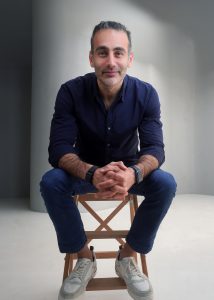
“Dubai is one of the most desirable real estate markets globally, but it’s not very accessible for everyday investors,” said Rami Tabbara, co-founder and co-CEO of GetStake, a fintech platform similar to PRYPCO. “Real estate still follows traditional methods — brokers, paperwork, huge down payments, spam messages. Fractional ownership flips that model on its head,” he said.
Instead of buying an entire property, investors purchase legal shares in income-generating assets, often apartments or villas already leased and professionally managed. They can track returns in real time through apps, and in some cases, even visit the properties. Stories range from investors who tested the waters with AED 500 and grew their portfolio to half a million dirhams, to a taxi driver proudly showing his AED 2,000 stake to a venture capitalist.
The appeal lies in transparency, diversification, and yields. While Real Estate Investment Trusts (REITs) also allow small-scale entry into large assets, fractional ownership offers direct equity in specific properties. “People are drawn to the idea of owning income-generating properties in prime locations without needing millions in capital,” Tabbara said.
The model is not without risks. Liquidity remains limited, since investors cannot always sell their fraction quickly. Performance also depends heavily on platform management and market conditions. Unoccupied units and economic downturns are potential pitfalls. Platforms are responding with stricter due diligence, vetting each asset with institutional rigour and encouraging diversification across multiple properties.
Local context matters, too. Expanding into Saudi Arabia, for example, required adapting to cultural expectations with Shariah-compliant structures and localised messaging. “The product remains the same,” Tabbara explained, “but the message must meet people where they are.”
Looking ahead, tokenisation could further transform the model by enabling secondary trading and liquidity, opening Dubai’s property market to a broader global investor base.
Tabbara described it as “a new form of fractionalisation. The technology changes, not the value proposition – it’s still real, tangible property ownership.”
Fractional ownership is not a shortcut to instant wealth. It is a long-term strategy for building assets in one of the world’s fastest-growing real estate markets, where transactions hit AED 761 billion in 2024 and residential investments are projected to keep rising.