

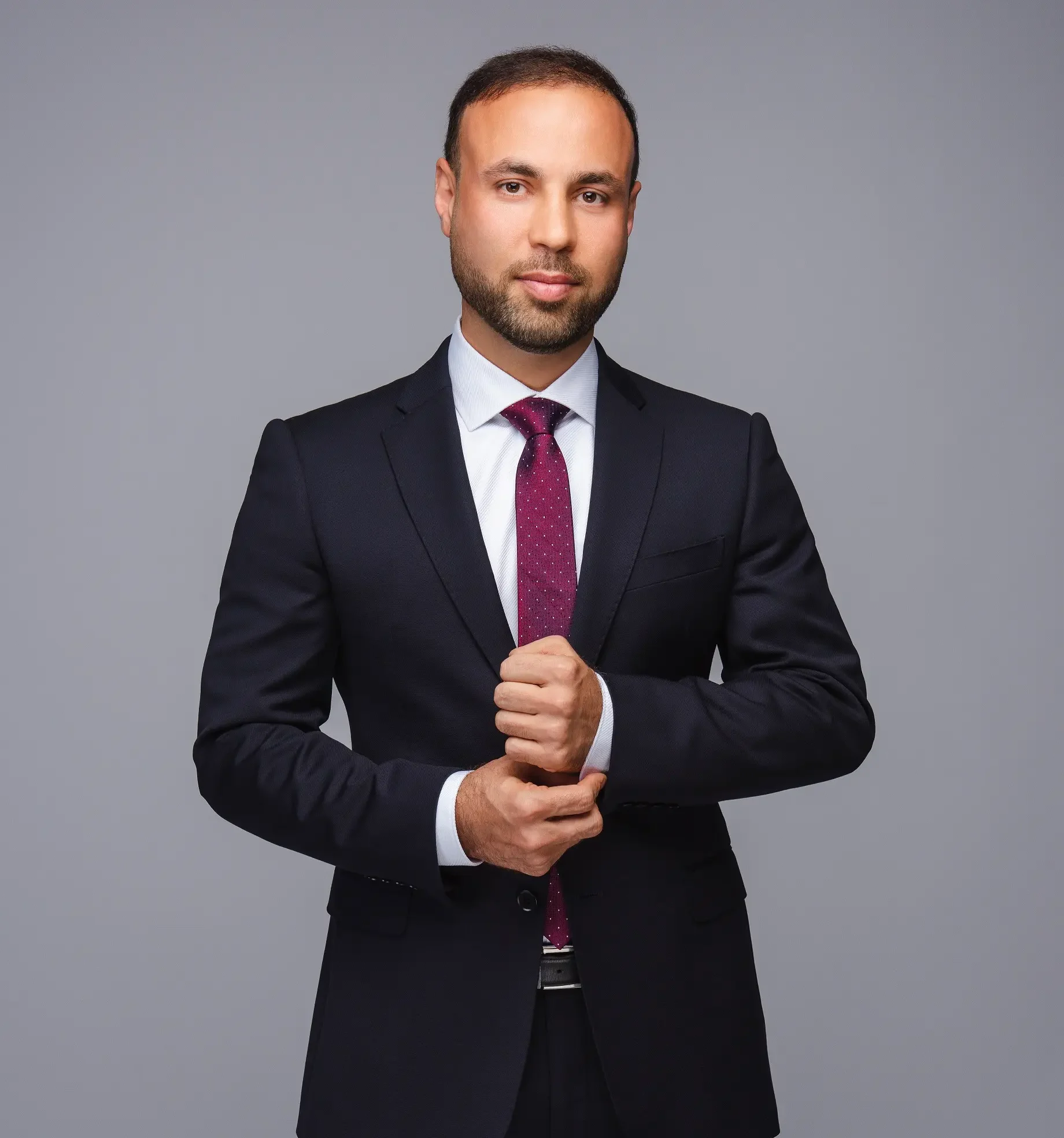
The greatest opportunity in real estate comes from Dubai itself, according to a leading private developer based in Dubai. In an interview with The Gulf Pulse, Farhad Azizi, Group CEO of Azizi Developments, said, “The emirate’s vision, governance, and ability to attract global talent and investment make it one of the most opportunity-rich real estate markets in the world.”
As he leads one of Dubai’s largest private developers at a time when the city’s property transactions are breaking records and demand far outpaces supply, Farhad reflects on the responsibilities of growth, the resilience of Dubai’s fundamentals, and the innovations shaping the next era of real estate.
“With such growth, the responsibilities are significant, ensuring timely handovers, aligning vast contractor networks, and embedding sustainability into every development,” he said, explaining that the company’s strategy is built on early procurement, strict quality protocols, and advanced systems such as SAP S/4HANA to unify operations and get real-time data.
“What gives us confidence is our construction-driven model and people-first culture. With over 36,000 men and women working with us here in Dubai and more than 45,000 homes delivered to investors and end-users from over 100 nationalities, our foundation is built on resilience and accountability. The real opportunity is enriching lives at scale while shaping communities that stand the test of time,” he said.
Undervalued property market
Dubai’s property market has seen values rise 70 percent in just four years, yet remains undervalued compared to global hubs such as London, New York, or Hong Kong, according to Knight Frank. In the first half of 2025 alone, 98,603 transactions worth AED 326.7 billion were recorded, marking the strongest half-year on record.
“This momentum is not speculative. It is built on fundamentals,” Farhad said. He noted that nearly 90,000 new residents moved to Dubai in Q1 2025 while only 12,000 homes were delivered. “Even with an 80 percent increase in completions this year, demand is well ahead. Minor corrections are natural, but the mid- to long-term trajectory remains decisively upward. Safety, tax advantages, visa reforms, and Dubai’s global appeal as the most visited city make this momentum sustainable and indicative of long-term growth,” he added.
He pointed to projects such as Burj Azizi on Sheikh Zayed Road, set to be the world’s second-tallest tower, Azizi Venice with 36,000 lagoon-facing homes and a AED 2.5 billion Cultural District, and Azizi Milan, a AED 75 billion master plan for 81,200 homes designed around sustainability, nature, and Italian refinement. “These developments reflect both our scale and Dubai’s rising global stature,” he said.
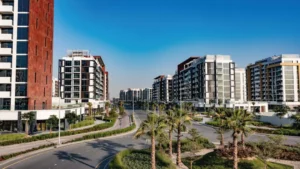
While global headwinds such as inflation or interest rate shifts impact markets elsewhere, Farhad described Dubai’s sector as “remarkably resilient” because it is largely cash-driven. In April 2025 alone, Dubai saw AED 62.1 billion in property transactions, with AED 34 billion in off-plan sales, up 124 percent year-on-year.
“Supply and demand balance is what we monitor most closely. With Dubai’s population expanding so fast, we as developers must build at speed while maintaining quality,” said Farhad.
Government initiatives such as Golden Visa reforms and economic diversification strategies, coupled with tourism growth and foreign investment, are further strengthening the market’s fundamentals. The UAE’s government-led reforms are also transforming buyer demand. “Long-term residency, expanded freehold ownership, and transparency in regulations are attracting investors worldwide. The government’s target of reaching AED 1 trillion in sector valuation by 2033 reinforces this trajectory,” he noted. For developers, this creates responsibility. “We align with the UAE’s Energy Strategy 2050, embedding green measures across planning and delivery. From sustainable sourcing and waste reduction to monitoring energy performance, our goal is to exceed benchmarks while responding to a shift in demand. Buyers today want aesthetics, sustainability, wellness, and convenience all integrated into one community.”
Digital transformation in development
Digital transformation is another area where Azizi sees a leap forward. “Our adoption of RISE with SAP Private Cloud and SAP S/4HANA goes beyond efficiency—it elevates the customer journey,” he explained. From sales and service to construction and after-sales, the new systems provide transparency, real-time updates, and faster interactions. “We’re also deploying SAP SuccessFactors for workforce management, Sales and Service tools for client responsiveness, and Field Service Management for after-handover needs. AI and automation through SAP’s Business Technology Platform allow us to personalize services, reduce wait times, and manage complexity as we expand with 150,000 units under development and AED 1 billion invested in 12 new factories. For customers, it means simpler processes, stronger trust, and an experience aligned with Dubai’s reputation for innovation,” explained Farhad.
Sustainability, he emphasized, is now a non-negotiable. “Across all projects we comply with LEED, Estidama, and Dubai Green Building Regulations. At Azizi Milan, for instance, we’ve integrated rooftop gardens, LED lighting, high-performance insulation, and smart water systems to create a carbon-conscious community. It benefits the planet and lowers costs for residents. More sustainable design also improves long-term performance. Sustainability has moved from a ‘nice-to-have’ to an essential expectation for both buyers and regulators,” he said.
Looking ahead, Farhad sees talent as the defining factor in an industry reshaped by technology. “Construction still depends on skilled labour, and the UAE remains attractive to global expertise. But competition is rising, especially in specialized trades, making workforce planning critical. Technology is reducing the need for routine roles in data entry or documentation, while creating demand for specialists in AI modeling, digital twins, blockchain transactions, sustainability compliance, and data integration. The future is a hybrid workforce—traditional construction roles supported by digitally skilled professionals who ensure projects are delivered on time, optimized for efficiency, and built for long-term value.”