


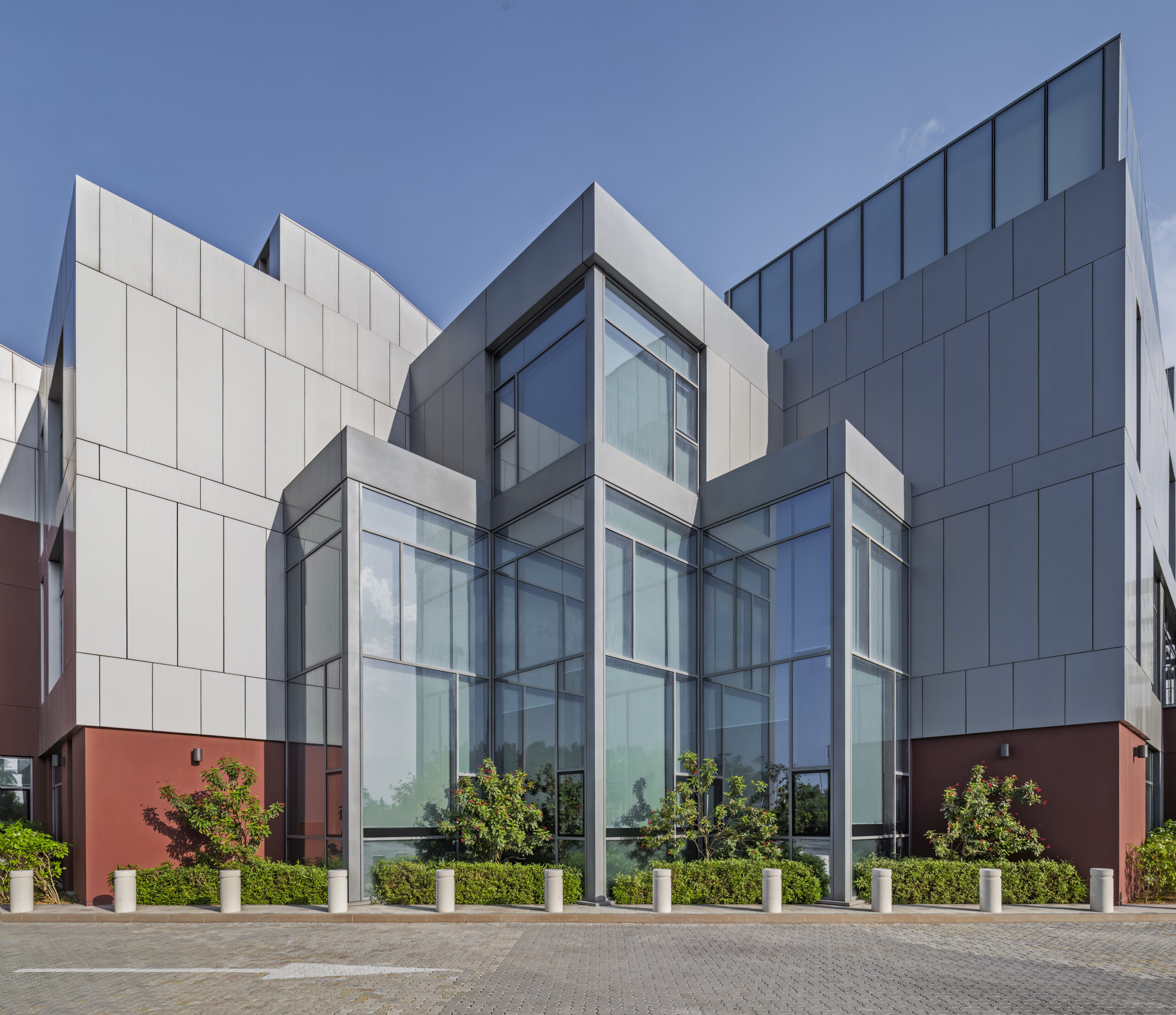
When Jason Burnside first arrived in Dubai in 2001, it was meant to be a short break from his architectural career in London. A chance meeting with an architectural and design practice firm, Godwin Austen Johnson’s (GAJ) founder, Brian Johnson, altered that course. What began as a two-week holiday became a decades-long journey of shaping Dubai’s architectural identity.
Today, as a partner at GAJ, Burnside has contributed to some of the UAE’s most recognisable projects, from Gate Village at DIFC, designed in collaboration with Sir Michael Hopkins Architects, to the competition-winning scheme for the UAE Parliament with EYRC Architects. His portfolio spans luxury residences like Serenia Residences, cultural projects such as GAJ’s upcoming art museum in the region, and one of Dubai’s most acclaimed sustainable campuses – Dubai College, the first outside the US to secure LEED certification.
But it is in the education sector where Burnside has left his most distinctive mark. Since 2011, GAJ has designed more than 20 schools, including the Ladybird Early Learning Centre, The Arcadia Preparatory School, and Emirates International School. For him, schools are not simply buildings but ecosystems that shape future generations.

Reflecting on two decades in the UAE, Burnside describes Dubai’s evolution as extraordinary. He says that unlike older cities that grew over centuries, Dubai has risen into a world-class metropolis in just half a century.
“The pace of development here is unmatched,” he says. “It’s a city unafraid of change, constantly improving itself, and that energy fuels our work as architects.”
Burnside admits that his specialisation in schools wasn’t intentional. It began with a colleague’s absence and an urgent commission. Yet that detour unlocked a passion for learning-space design, which he sees as a chance to leave a lasting legacy.
Projects such as Ladybird Early Learning Centre, which won multiple sustainability awards, show how GAJ challenges traditional school layouts. By rethinking ventilation, daylighting, acoustics, and multifunctional spaces, Burnside’s team creates environments that are not only efficient but also inspiring, inclusive, and responsive to neurodiverse needs.
“Education design is about shaping communities,” he explains. “If teachers feel motivated and students feel comfortable, it creates a holistic ecosystem where everyone thrives.”
For Burnside, sustainability is more than solar panels or token green features. GAJ draws lessons from vernacular Gulf architecture such as overhanging rooflines, shaded courtyards, and natural ventilation that are used to reduce energy loads.
At Ladybird, simple interventions like ceiling fans allowed higher AC set points, while shaded glazing reduced heat gain without sacrificing daylight, he explains the concept behind the design. At Dubai College, the LEED-certified campus includes a green atrium, library, and internal gardens that double as teaching spaces while making the educational space inviting for students.
GAJ’s current projects extend this ethos further, particularly in Ras Al Khaimah, where they are integrating native, hardy plants into landscapes to reduce water use while reconnecting communities with biodiversity by reintroducing trees, birds, and insects into increasingly urbanised environments.
“Wellness is part of sustainability,” Burnside says. “Healthy air, natural materials and inclusive spaces all impact how people feel and perform inside buildings.”
Burnside emphasises liveability as the defining principle for architecture in the UAE. Whether in schools, homes, or public spaces, GAJ prioritises transparency, natural light, and flexible layouts that foster collaboration and belonging.
Jason’s take on must-have design components
- Classrooms must always have natural daylight and good acoustics.
- Every ground floor must tell a story with its entrance.
- Urban design must encourage mobility by building footpaths, cycling routes, and green corridors.