


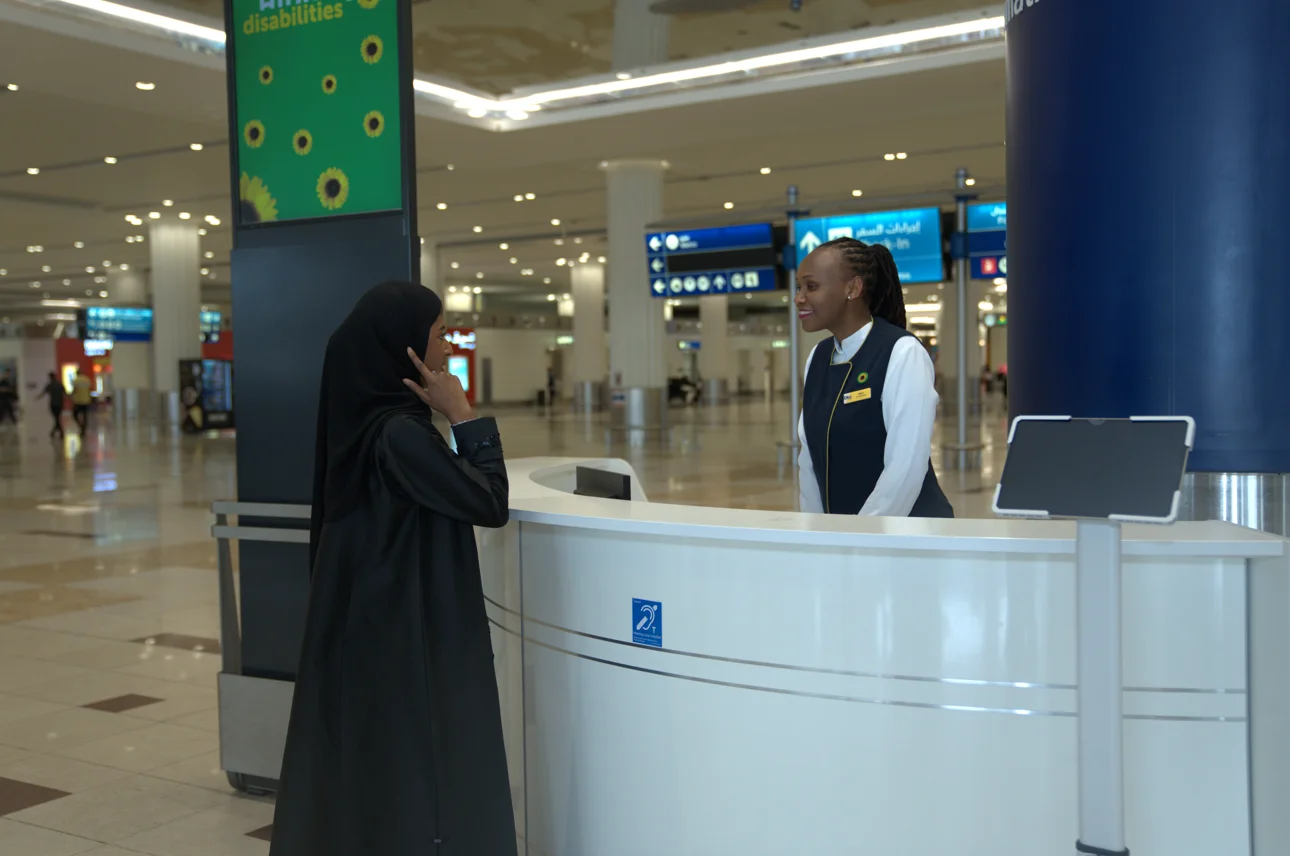
Dubai Airports has completed the installation of more than 520 hearing loops across Dubai International (DXB), in what is now the world’s largest deployment of the technology.
The move aims to make the airport more accessible for travellers with hearing loss, including those using hearing aids or cochlear implants, and underscores DXB’s ambition to be the world’s most inclusive airport.
The loops have been installed at key points across all three terminals – from check-in counters and immigration desks to boarding gates and information points. The system allows travellers to connect directly by activating the telecoil (‘T’) setting on their devices, with no need for pairing or additional equipment.
Majed Al Joker, Chief Operating Officer at Dubai Airports, said the project was about dignity as much as accessibility. “We are committed to ensuring that every guest, regardless of ability, can navigate our terminals with ease, dignity, and confidence. The successful installation of over 520 hearing loops is a testament to the collaborative spirit of our oneDXB airport community, including all our strategic partners and airlines, whose unified effort is making our shared vision of a more seamless and accessible travel experience a reality for all,” he said.
The rollout was achieved with support from DXB’s oneDXB partners, including Emirates, flydubai, Dubai Police, GDRFA, Dubai Customs, dnata, Dubai Corporation for Ambulance Services, Dubai Taxi Company, and Dubai Duty Free.
The project is aligned with Dubai’s Universal Design Code, which requires inclusive access across public spaces and transport infrastructure. Frontline airport staff have also received specialist training to assist travellers with hearing loss.
Globally, more than 1.5 billion people live with some degree of hearing loss, a figure expected to rise to 2.5 billion by 2050, according to the World Health Organisation. For airports, accessible communication is no longer an added benefit but a necessity.
For DXB, the rollout is part of a wider accessibility strategy that focuses on guest-centred design, infrastructure upgrades, and training to ensure travellers of determination feel welcome and supported from kerb to gate. – WAM