


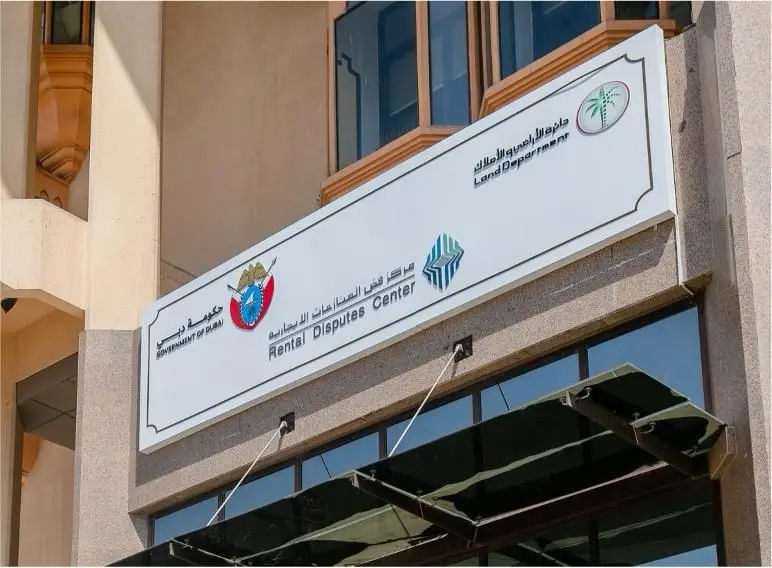
The Dubai Rental Disputes Centre (RDC) has introduced a new legal principle on service charges for maintaining shared building facilities, addressing recurring disputes between developers and owners.
Owners must pay service fees even if they haven’t taken possession of their unit if the delay in handover is due to the buyer (such as non-payment of dues). This interpretation is anchored in Law No. (6) of 2019 on Jointly Owned Properties, which regulates the payment of such fees to cover management, operation, and maintenance costs. Service charges cover building operations and maintenance, therefore, these fees must be paid to ensure uninterrupted services for all residents. For unsold units, the law requires either the developer or the current owner to cover the charges until the unit is sold.
According to the law, either the developer or the owner must bear these charges for unsold units, with funds directed to management companies to ensure uninterrupted services and efficient building upkeep. While the legislation has been generally clear, a unique situation had sparked legal uncertainty: units sold via installments that were completed but not yet registered under the buyers’ names. In several cases, developers withheld delivery due to outstanding dues, raising the question of who should cover the service fees the buyer or the developer.
To settle this ambiguity, the case was referred to the General Authority for Unifying Principles within the Centre. Following a comprehensive review of the relevant legal provisions, the Authority determined that the buyer whose name appears in the preliminary register of the residential unit is liable for service charges starting from the date of project completion or from the moment of default on payment obligations, even if final ownership has not yet been transferred. This ensures continuous facility operations and protects developers and compliant owners from financial burdens.
Why the change was needed
A legal grey area existed when buyers had completed installment payments but their property was not yet officially registered in their name. Developers often withheld delivery due to outstanding payments, creating disputes about who was responsible for paying service charges during that period.
The RDC’s General Authority for Unifying Principles reviewed the issue and decided that the buyer listed in the preliminary register of the unit is responsible for paying service charges from the project’s completion date, or from the moment of default on payments. “This ensures continuous funding for building management and prevents compliant owners and developers from being burdened with costs caused by defaulting buyers,” said the ruling.
Judge Abdulqader Mousa Mohammed, President of the RDC, said the ruling closed a legislative gap. “The General Authority has addressed this legislative gap by interpreting the law’s underlying intent to secure the stability of jointly owned properties and guarantee the uninterrupted provision of essential services. Holding defaulting buyers accountable for service charges aligns with the spirit of the legislation. By doing so, we have established a clear judicial precedent that eliminates confusion, strengthens practical approach, and reaffirms our commitment to justice and fair dispute resolution.”
On a broader level, this ruling reinforces investor confidence in Dubai’s real estate framework by protecting compliant owners from subsidising defaulters, as well as preventing disruptions in building services. It also ensures developers are not financially disadvantaged by unpaid fees.
In 2024, the RDC closed nearly 50,000 execution files related to joint ownership and launched a self-execution service that allows management companies to submit service fee claims more efficiently, supporting smoother property operations. – with inputs from WAM