

Lebanon, a nation at the crossroads of the Mediterranean Basin and the Arabian Peninsula, has long been caught between aspiration and instability. Today, the country finds itself in the midst of a housing dilemma: real estate prices are soaring even as purchasing power collapses. Forecasts suggest the market could reach a value of $605.08 billion by 2025, according to Statista, but beneath the surface lie questions about who is truly benefiting from this growth and whether housing loan programs actually provide security for those who need it most.
The housing loan paradox
Since 2011, Lebanon’s housing loan program has lurched between suspensions, restrictions, and revivals. For ordinary citizens, especially low- and middle-income groups, this inconsistency has meant one thing – uncertainty. When loans were available, they often came with strings attached such as limited ceilings, high interest rates, or selective eligibility. When suspended, families were left with few options but to dip into savings, accumulate debt, or turn to informal housing.
Experts argue that loans, far from being tools of security, often became debt traps. Hyperinflation eroded their real value. The mismatch between loan amounts and housing prices meant that by the time funds were released, costs had already outpaced borrowing power.
“Housing loans are becoming more selective and more luxury than necessary,” said Dr. Layal Mansour Ichrakieh, a macroeconomist at the Lebanese American University. “They attract Lebanese abroad more than residents, because long-term stability is not guaranteed for those still living in Lebanon.”
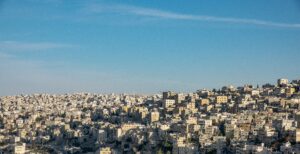
Lebanon’s housing market is entangled with politics. Civil society investigations revealed that more than 80 percent of the country’s coastline has been privatized, fueling speculation and pushing vulnerable groups to the margins. Clientelism and patronage networks continue to shape who gets access to housing loans, permits, and property.
The economic crisis that erupted in 2019 intensified the imbalance. Inflation peaked at 171.2 percent in 2022, while the Lebanese pound lost 98 percent of its value against the dollar by early 2023. Construction costs skyrocketed. Cash buyers who no longer trusted banks began dominating the market, sidelining loan-dependent households altogether.
A system under pressure
Even before the crash, subsidized loan programs introduced by Banque du Liban were criticized for fueling demand without building adequate supply. Contractors, focused on profitable high-end projects, neglected social housing. By 2021, prices in some areas had surged by up to 150 percent. Renters fared no better. Tenant protections were poorly enforced, leaving over half of households at risk of eviction, according to Housing Monitor.
Recent reforms and their limits
In recent years, the Banque de l’Habitat (BDH) has attempted to revive housing loans with new funding streams. In 2024, it received $165 million from the Arab Fund for Economic and Social Development. In 2025, discussions with the Qatar Fund for Development and the Abu Dhabi Fund for Development raised hopes of further injections. The government even doubled BDH’s loan ceiling from $50,000 to $100,000.
But critics remain unconvinced. The criteria for eligibility — income, nationality, age — remain narrow and disconnected from the lived realities of financially vulnerable groups. Reforms continue to prioritise financial institutions’ risk models rather than socio-economic needs, ignoring how volatile income, currency collapse, and political favoritism distort traditional risk assessments.
Loans alone cannot solve structural problems. Without regulations to control speculative inflation, enforce tenant protections, and incentivise affordable development, loans only inflate prices further. Experts argue that reforms must go beyond ceilings and interest rates. Options like income-adjusted interest rates, streamlined application processes, and broader eligibility criteria could help. But systemic change, tackling corruption, enforcing regulation, and embedding social housing within national policy remains the true missing piece.