


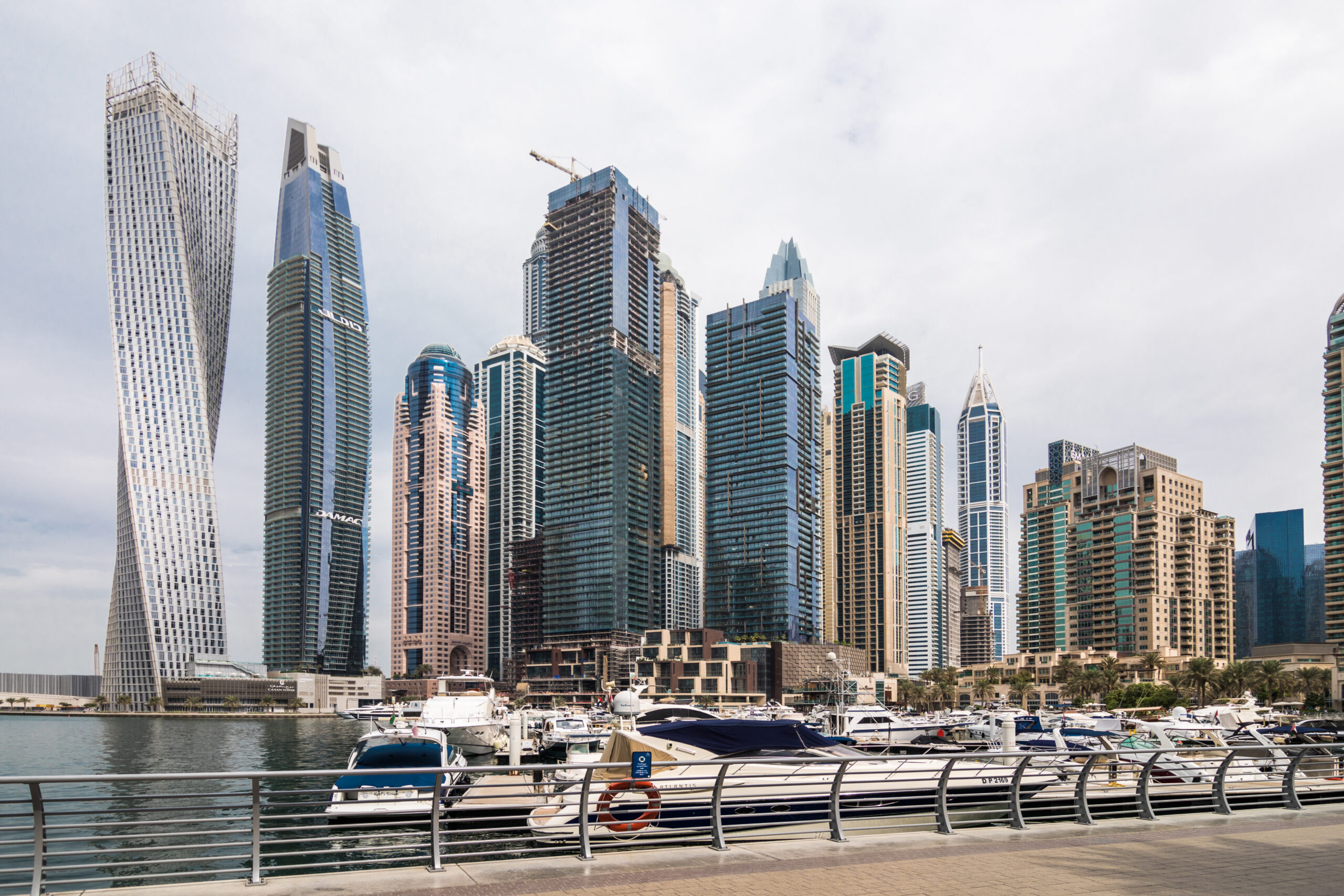
Dubai’s property market is showing a clear tilt towards off-plan sales, with investors and end-users favouring projects under development over ready-to-move homes.
The shift is driven by financial strategy, lifestyle aspirations, and confidence in the emirate’s long-term growth, as flexible payment structures and strong returns continue to appeal to a diverse buyer base.

“Dubai’s off-plan market continued to outpace ready home sales in 2024–2025,” said Haider Tuaima, Managing Director and Head of Real Estate Research at ValuStrat.
“Oqood registrations in July accounted for 78 per cent of residential transactions, compared to 33 per cent in the same period of 2014. Many buyers are influenced by recent gains, with some communities doubling or tripling in value since 2021. However, these gains followed the bottom of the cycle three to four years ago. The market is now approaching the peak of this growth phase.”
Lifestyle remains another strong motivator. Mustafa Aziz, CEO and Founder of Hometrack Real Estate, said: “Lifestyle aspiration is number one. People are drawn to thriving locations, state-of-the-art architecture, smart home systems, and amenities they could only dream of before. Off-plan properties allow buyers to maximise returns within months of handover while tailoring homes to their own tastes.”

Location also continues to play a decisive role, with Tuaima citing Jumeirah Village Circle, Business Bay, Dubai Investment Park Second, Sobha Hartland 2, and Dubailand Residence Complex as the most active hotspots. Al Furjan, Al Quoz Fourth, and Jumeirah Lake Towers have even set monthly sales records. He added that design, technology, and community planning are increasingly important in sustaining demand.
Financial strategy underpins the momentum. Average off-plan ticket sizes rose to AED 3.2 million in Q2 2025, a 31.6 per cent year-on-year increase, with over 35,700 Oqood contracts worth AED 113 billion registered. Tuaima noted that demand comes from both investors and end-users, each with different priorities. “Investors focus on returns, while end-users prioritise comfort and personal touches,” he said.
Luxury demand adds another dimension. According to the Henley Private Wealth Migration Report, nearly 9,800 millionaires are expected to move to the UAE in 2025. Aziz said the influx is fuelling interest in branded residences, prime locations, and luxury projects. He added that Dubai’s international buyer mix from India, China, Russia, and Europe provides resilience to the market.
Despite the strong returns, risks remain. Tuaima cautioned that early buyers can benefit from price appreciation but must account for potential market shifts, project delays, and developer reliability. Aziz advised first-time investors to examine track records carefully: “Government-backed and large-scale developers provide more security, while smaller developers require closer scrutiny.”
Emerging trends such as tokenisation, fractional ownership, and co-living concepts could also reshape participation in off-plan projects, opening luxury developments to smaller-scale investors while sustaining demand.
Asked how he would invest AED 5 million today, Aziz said: “If you’re seeking capital growth, off-plan is attractive. If you prefer immediate income, a ready property is better. Off-plan offers potential for higher returns, early-bird pricing, and lifestyle perks, but it requires research and patience.”
He agreed that while villa values are now 73 per cent above the 2014 peak, apartment values remain four per cent below it, signalling scope for growth. With regulatory oversight, strong infrastructure, and a diversified buyer base, Dubai’s off-plan market in 2025 is more than a trend — it represents a convergence of aspiration, investment, and long-term urban planning.